For the longest time, I called myself a morning person. Not because I'd tested it, but because I'd simply never tried the alternative. Then one night, for reasons that had nothing to do with proving anything, I stayed up working on something that actually interested me. And somewhere around midnight, I noticed I wasn't dragging. I was sharp and Alert. Thinking clearly in a way I usually only felt right after waking up.
Turns out, I wasn't a morning person by nature. I was a morning person by default, simply because I'd never given the night a real chance.
We do this with more than sleep schedules
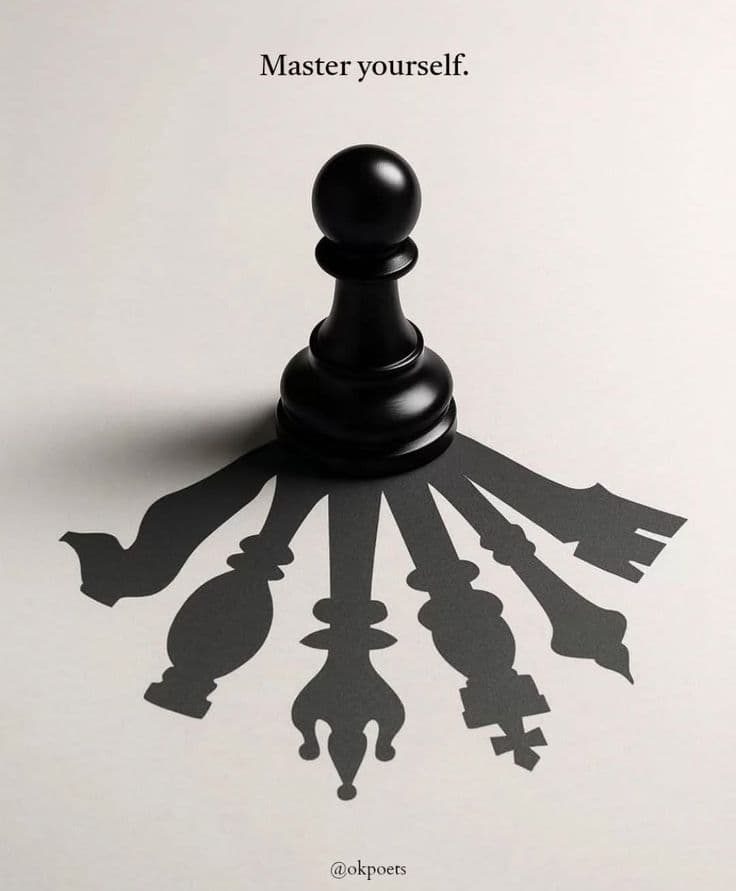
We build entire identities around things we've never actually tested. "I'm not a public speaker." "I'm not good with numbers." "I don't do well under pressure." "I'm not creative." Say it enough times and it stops sounding like a guess and starts sounding like your reality. But most of the time, it isn't your reality at all. It's just an untested assumption wearing the costume of self-knowledge.
Research on comfort zones shows something interesting. People tend to avoid unfamiliar situations not because they're actually incapable, but because humans are naturally motivated to feel competent and in control, which makes the familiar feel safer than the uncertain, even when the uncertain holds no real threat. That night hesitation. That "I don't think I can" before you've even attempted it. Most of it isn't information about your ability. It's just your brain preferring predictability over the unknown.
And the cost of never testing that assumption is higher than we realize. Chronic avoidance of discomfort is strongly linked to reduced self-efficacy, meaning every opportunity you turn down without even trying quietly reinforces the belief that you couldn't have done it anyway, whether or not that was ever true.
The flip side is just as real
The more you experience success from stepping outside what you assumed about yourself, the more your self-efficacy grows, and that becomes a compounding cycle, not a one-time event. That's exactly what happened with my nights. One late night of genuine focus didn't just teach me something about my sleep pattern. It quietly rewired a belief I'd been carrying for years.
This matters more in a culture that hands you your identity early
In a lot of our homes, capability gets decided for us before we never get the chance to test it ourselves. "You're not the academic type." "You're not built for business." "You're the quiet one, not the leader." “You're very lazy.” Said by people who love us, sometimes even meant as protection. But repeated identity statements, especially ones we never personally verified, become the ceiling we stop questioning.
Across Africa right now, so much of the growth happening, in tech, in health innovation, in business, is being driven by people who simply refused to accept an untested label. The student who assumed she wasn't "a numbers person" until she was forced to build a budget for her own business. The young man who assumed he wasn't a leader until someone put him in charge out of necessity, and he rose to it (This particular one happened to me).
So here's the real question worth sitting with
Of everything you currently believe you're not, how much of it is actually tested? And how much of it is just a label you inherited, or a guess you made once and never returned to challenge?
You might not be a night person. You might not be a numbers person. You might not be the leader type. Or you might be all of those things, and you simply haven't tried long enough to find out.
Try the thing first. Let the label come after.
Try it first. Label after!
You're soo right! Because, i used to think i was terrible at speaking in public before till I challenged myself last semester and participated in a debate. That was when I knew I had potential. Lots of people clapped for me and kept giving good remarks on how eloquent I was. Just don't sit back and relax on a mere assumption, give it a try!