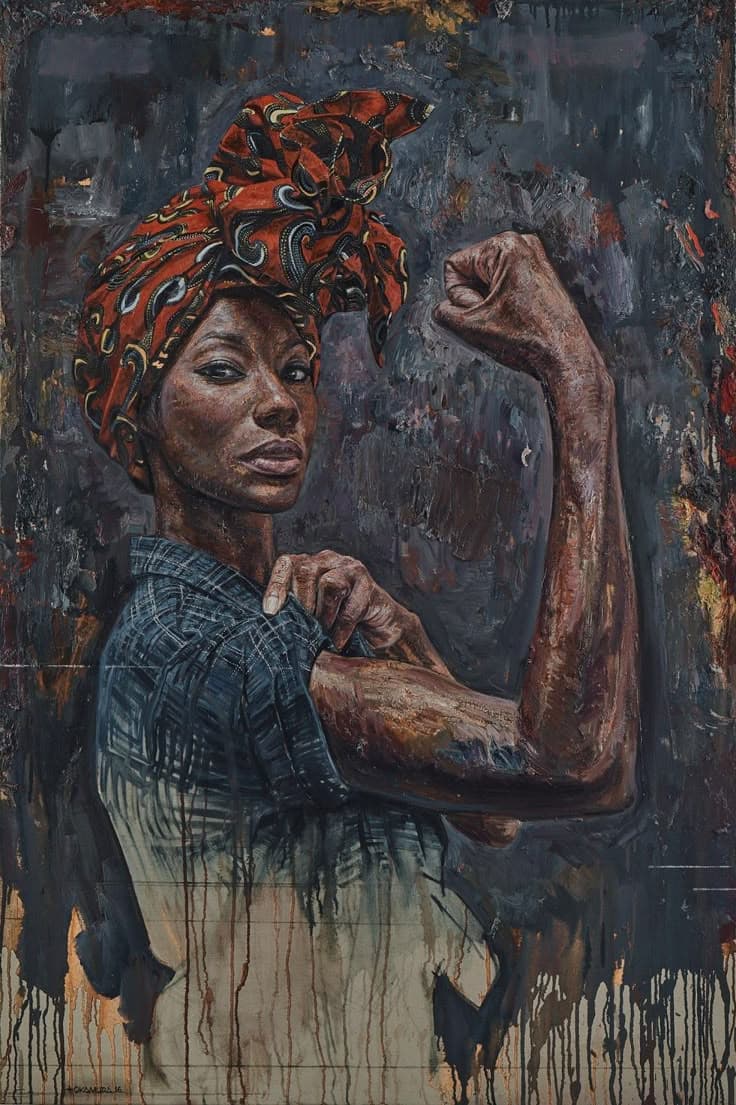
In many African societies,a woman can spend years acquiring an education,building a career,establishing herself and still find herself being asked a question that seems to carry more weight than all her accomplishments combined: "When are you getting married?"
It is an interesting contradiction. We encourage girls to go to school,become independent,pursue their ambitions and contribute to society. Yet as they grow older,a different set of expectations begin to emerge. Their achievements are celebrated but their marital status is still examined. It is almost as though everything they have accomplished exists alongside an invisible qualification they have yet to obtain.
Marriage.
Perhaps we should ask how an institution that is supposed to be a personal commitment became a public measure of female accomplishment.
To understand this,we should look beyond contemporary social expectations and consider the historical place of marriage in African societies. Marriage in many traditional communities was never simply about romantic companionship. It was an institution through which families formed alliances,kinship networks were strengthened,inheritance of properties were organised and children were integrated into extended family structures. Women's roles within these arrangements were often closely connected to reproduction,domestic responsibilities and family continuity.
These historical arrangements differed across communities,but they helped establish an understanding of womanhood in which marriage was considered a significant marker of social recognition.
The difficulty is that societies change,but cultural expectations do not always change at the same pace.
African women now occupy spaces that previous generations may not have had access to. They are entrepreneurs,professionals, researchers,political participants and innovators. They contribute intellectually and economically to their communities. Yet,in some households and social environments,their independence has not necessarily translated into freedom from traditional expectations.
Instead,a curious contradiction has emerged: women are encouraged to become accomplished,but their accomplishments are sometimes treated as secondary to their ability to establish a family!
This contradiction becomes even more unreal when we examine how society discusses unmarried men and women.
A man who is unmarried at thirty-five may be considered ambitious,financially focused or simply uninterested in settling down. A woman of the same age may be subjected to questions about what she is doing wrong. Her standards may be questioned,her character examined and her personal decisions interpreted as evidence of a problem.
Why does society so readily grant men the privilege of being individuals while women are still expected to justify their individuality?
There is also a less obvious consequence of this expectation,which is that it can influence the decisions women make about their own lives. When marriage is consistently presented as the ultimate destination,women may begin to measure their progress against a timeline that has little to do with their actual aspirations. Some may feel compelled to enter relationships they are not ready for,to tolerate circumstances they would otherwise reject,or interpret singleness as a personal failure.
In such circumstances,marriage ceases to be simply a choice. It becomes something to achieve,sometimes at the expense of the very individual it is supposed to fulfil.
But perhaps the most important issue is not that African societies value marriage. There are legitimate cultural,religious and personal reasons why people cherish the institution. The issue is the unequal burden of expectation placed upon women and the assumption that a woman's life must eventually be validated through her relationship with a man.
We should be able to celebrate marriage without diminishing unmarried women. We should be able to value motherhood without suggesting that women who do not have children have somehow failed at womanhood. And we should be able to respect cultural traditions without assuming that every inherited expectation must remain beyond criticism.
Tradition deserves understanding,but it should not be exempt from examination.
A society that genuinely values women must be able to recognise their contributions without requiring them to fulfil a particular domestic role first. A woman's education should matter. Her intellectual development should matter. Her work,her ambitions,her character and her contribution to the world should matter.
Not because these things compensate for the absence of a husband,but because they have value in their own right.
Maybe we need to reconsider what we mean when we say a woman has succeeded in life.
If a woman is expected to spend her formative years becoming educated,her adult years becoming financially independent and the rest of her life proving that she has successfully secured a marriage,at what point is she permitted to define success for herself?
Marriage can be a beautiful part of a woman's life. But it should never be the condition that makes her life beautiful,meaningful or complete.
The real measure of a society's progress is not simply how many opportunities it makes available to women,but whether it can respect the lives women choose to build with those opportunities.

I agree, the societal pressure on women for marriage is undeniably high. It almost feels like a woman is on a ticking time bomb to marry. This is amazing!