
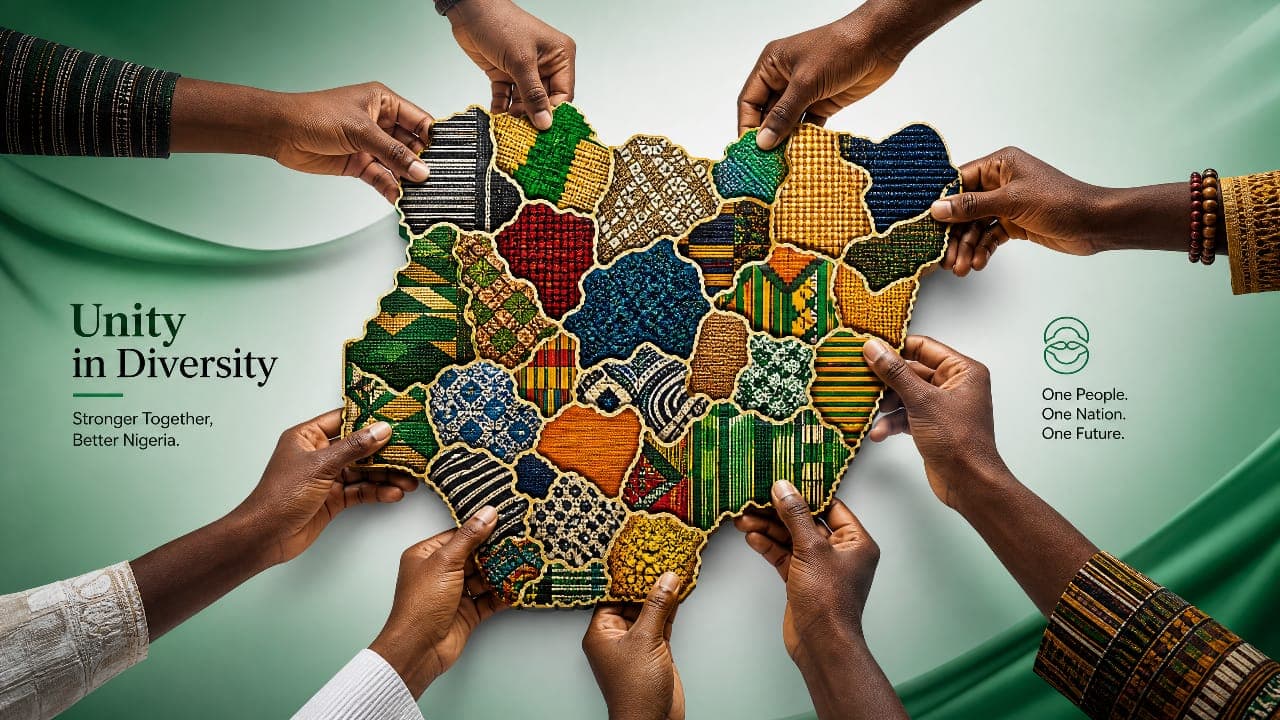
Tribalism and Bigotry — An Obstacle to Development
Title: Beyond the Borders of Identity: Navigating Tribalism and Bigotry in Modern Nigeria
This compelling series delves into the historical and socio-political complexities of tribalism and bigotry—forces that continue to challenge the developmental trajectory of one of Africa’s most diverse nations.
The Historical Construct of a Nation
The 1914 amalgamation of the Northern and Southern Protectorates created a federalist structure that brought together disparate ideologies, cultures, and religions. While this "merger" was intended to forge a unified state, the reality has often been a test of endurance, where tribal consciousness frequently supersedes national identity.
Defining the Divide
Tribalism: While inherently a source of identity and mutual support, tribalism becomes a "negative vice" when it fosters an exclusionary "us versus them" mentality.
Bigotry: Defined as an unreasonable attachment to a faction, it serves as the fuel for prejudice, leading to historical scars like the Biafran War and the Tiv-Junkun conflict.
The Manipulation of Identity
This extract reflects on Arthur Schopenhauer’s observation: we spend our lives defending identities—names, nationalities, religions—that were chosen for us at birth. This inherent vulnerability is often exploited by political actors who weaponize tribalism to mask administrative inadequacies and maintain power.
The Path Forward: Diversity as a Gift or a Burden?
There are two primary systemic solutions:
Inclusive Governance: Ensuring representation for all ethnic groups, though logistically challenging in a multifaceted nation.
Confederalism: Allowing tribes to govern themselves independently to mitigate friction.
Ultimately, the piece poses a critical question for the modern era: Should we sacrifice our unique multi-ethnic diversity for a more segmented system, or can we find the "vigor in our multifacetedness" to transform our diversity from a burden into a gift?
#Nigeria #Tribalism #SocialDevelopment #InclusiveGovernance #IdentityPolitics #Leadership #DiversityAndInclusion
Really concise and solid nice on broskiiii many more love a collaboration soon!!