When I first heard “HPV vaccine” in SS2, I thought it was just another injection they give girls in secondary school. Honestly, I didn’t think much of it.
Then recently, while I was interning at a private hospital, we met a 38-year-old mother of 3 who came to the PHC with “excess bleeding.” The doctor suspected cervical cancer. She had never heard of HPV. She had never done a Pap smear. She said, “I thought that thing only happens to oyibo people.” That broke me. Because the truth is: cervical cancer is killing us, and we have a vaccine for it.
The reality on ground:
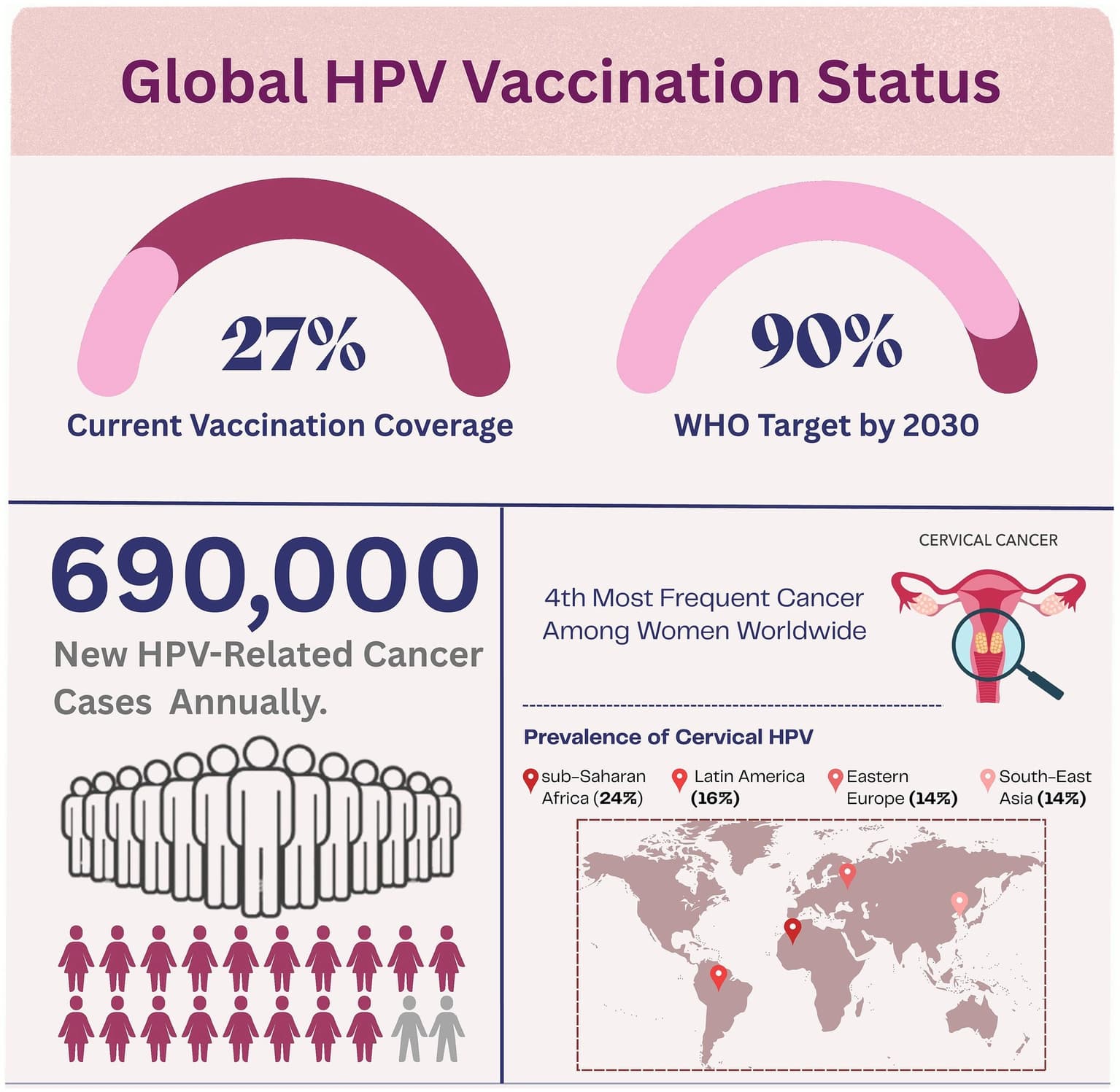
Globally, over 300,000 women die from cervical cancer every year. 70% of those deaths are in Africa. In Nigeria, it’s the 2nd most common cancer in women after breast cancer. Think about your aunties, your lecturers, your course mates’ moms.
And here’s the crazy part: HPV; the virus that causes 90% of cervical cancers is preventable. The vaccine works. Countries like Rwanda and Australia are already seeing cancer rates drop because they vaccinated girls early.
So why is Nigeria still struggling?
3 reasons it’s still low in Nigeria
1. Many of us just don’t know
Ask 10 people in your hostel: “What is HPV?” 8 won’t know. In most secondary schools, we learn about malaria, HIV, cholera. But HPV? Rarely.
A lot of people only heard about it on TikTok. A 30-second video from a nurse. That’s it. No school program, no hospital talk.
If we don’t know it exists, how do we ask for the vaccine?
2. Access and money are a problem
Before October 2023, the HPV vaccine wasn’t even in the Nigerian national routine immunization program. One dose in a private hospital could cost ₦15,000 - ₦25,000. For a parent in Makurdi or Sokoto with 4 kids, that’s impossible.
Now FG has started rolling it out for girls 9-14 in 16 states, with GAVI support. But cold chain, reaching rural areas, training health workers; it’s slow. In Lagos, some girls got it in school.
3. Stigma and “what will people say”
This one is big. Because HPV is sexually transmitted, many parents hear “vaccine for a sex virus” and panic.
There’s also WhatsApp misinformation: “It causes infertility.” “It’s a population control plan.”
So instead of protecting our girls, we argue.
But there’s hope:
Rwanda vaccinated over 90% of girls in 2 years by going to schools and using community health workers. Kenya is doing it. South Africa is doing it.
In Nigeria, the 2023 rollout in states like Lagos, Kano, and Bayelsa is a start. I saw girls in a public school opposite my school line up to get it. They were laughing, taking selfies. That’s what it should look like.
As students, we have a role. We can be the ones to explain it to our moms without shame. To correct the “infertility” myth. To push for it in our communities.
So I’ll leave you with this:
If the vaccine is free tomorrow in your department, would you tell your younger sister, cousin, or neighbor to take it?
And if the answer is “I’m not sure,” then we’ve found the problem.
We can’t keep treating cervical cancer when we can prevent it.
No comments yet. Sign in to join the discussion.