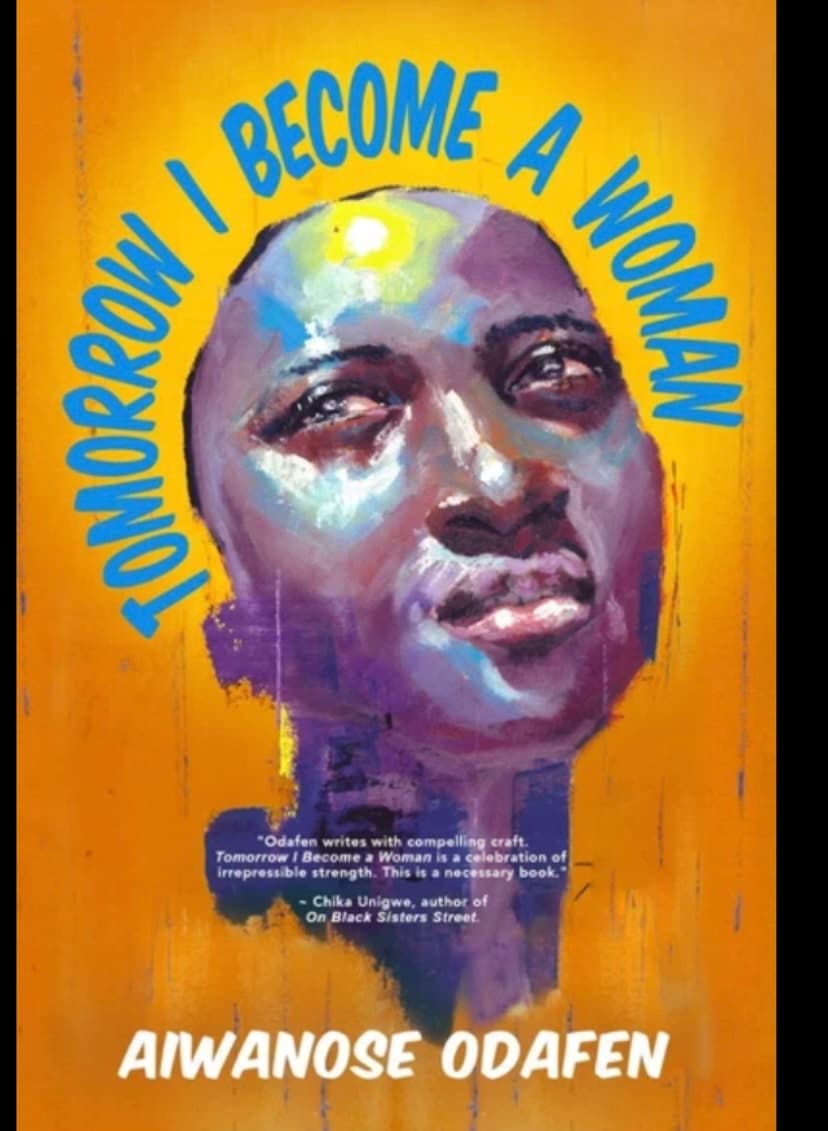
While reading Tomorrow I Become a Woman by Aiwanose Odafen, I found myself thinking about something beyond the abuse itself.
What stayed with me was how difficult it was for Uju to leave, even when she knew she was being hurt. But perhaps what disturbed me even more was what happened whenever she tried to seek help. The people around her seemed more concerned about the shame of a failed marriage than the pain she was experiencing.
And it made me wonder:
What happens when a woman finally speaks about the abuse she is experiencing, but the people around her are more concerned about preserving the marriage than protecting her?
Uju entered her marriage young. She knew the man she was marrying and had feelings for him, but she was not entirely certain that she was ready to take that step. Her mother liked him and wanted to see her daughter married, and Uju wanted to make her mother happy.
So she agreed.
But marriage revealed a side of her husband she had not known before.
The abuse began gradually and became worse with time. What may have initially seemed like isolated incidents became a pattern. Uju found herself living with a man who hurt her physically and emotionally, while she struggled to find a way out.
And it wasn’t only Uju who witnessed the consequences.
Her children watched their father abuse their mother.
Imagine growing up in a home where the person who is supposed to make your mother feel safe is the person hurting her.
Yet when Uju tried to speak about what was happening, the response she received from those around her was not always, “How can we help you?”
Instead, she was reminded of her responsibilities as a wife.
She was told to protect her marriage. To consider what people would say. To apologize when her husband was angry, even when he was the one at fault.
Her husband’s position and reputation also mattered. He was a deacon in his church. What would people think of him? What would people think of the family if the marriage failed?
But somewhere in all of these concerns was a question that seemed to disappear:
What was happening to Uju?
At what point does protecting a marriage become protecting the appearance of a marriage?
And why is the woman so often expected to carry that responsibility alone?
When a man becomes angry and hits his wife, the question should not begin with, “What did she do?”
Because whatever she did, it does not give him the right to hurt her.
Disagreement does not justify violence.
Anger does not justify violence.
Marriage does not justify violence.
And being a wife does not mean losing the right to safety, dignity or respect.
What made Uju’s situation even more painful was that she eventually left her husband’s home and went to her mother’s house. She had finally taken the difficult step of removing herself from the environment where she was being hurt.
But even there, she was not given the freedom she needed.
Her mother repeatedly pressured her to return to her husband.
Go back to your husband’s house.
Go back.
Go back.
Even after Uju had explained what she was experiencing.
Even after the violence.
Even after the physical evidence of what had happened to her became impossible to ignore.
And I kept wondering: what does a woman have to endure before we believe her?
Why does the preservation of a marriage sometimes become more important than the wellbeing of the person inside it?
We often tell women experiencing domestic violence to speak up.
But Uju’s story made me think about what happens after she speaks.
Does someone listen?
Does someone believe her?
Does someone help her?
Or do we ask her to be more patient, more forgiving, more submissive, more understanding?
Do we ask her what she did to make him angry?
Do we ask her to think about the children, the family name, the church, the community and what people will say?
And somewhere in the middle of all these questions, do we forget the woman?
Uju’s story is fictional, but the questions it raises are not.
Domestic violence is not only about the person who commits the violence. It is also about the environment surrounding the victim..the people who respond to her, the beliefs that shape those responses, and the expectations that can make leaving seem more shameful than staying.
Perhaps this is why the question should not only be:
“Why doesn’t she leave?”
Perhaps we should first ask:
“What happens when she tries?”
To be continued..
#enddomesticviolence

Wow! This is a sad reality. I am always so frustrated that most of the marriage responsibilities and its failures fall on the women. It saddens me that no one asks the question of how she feels. It's always the man’s reputation, status, and how it affects just the man.