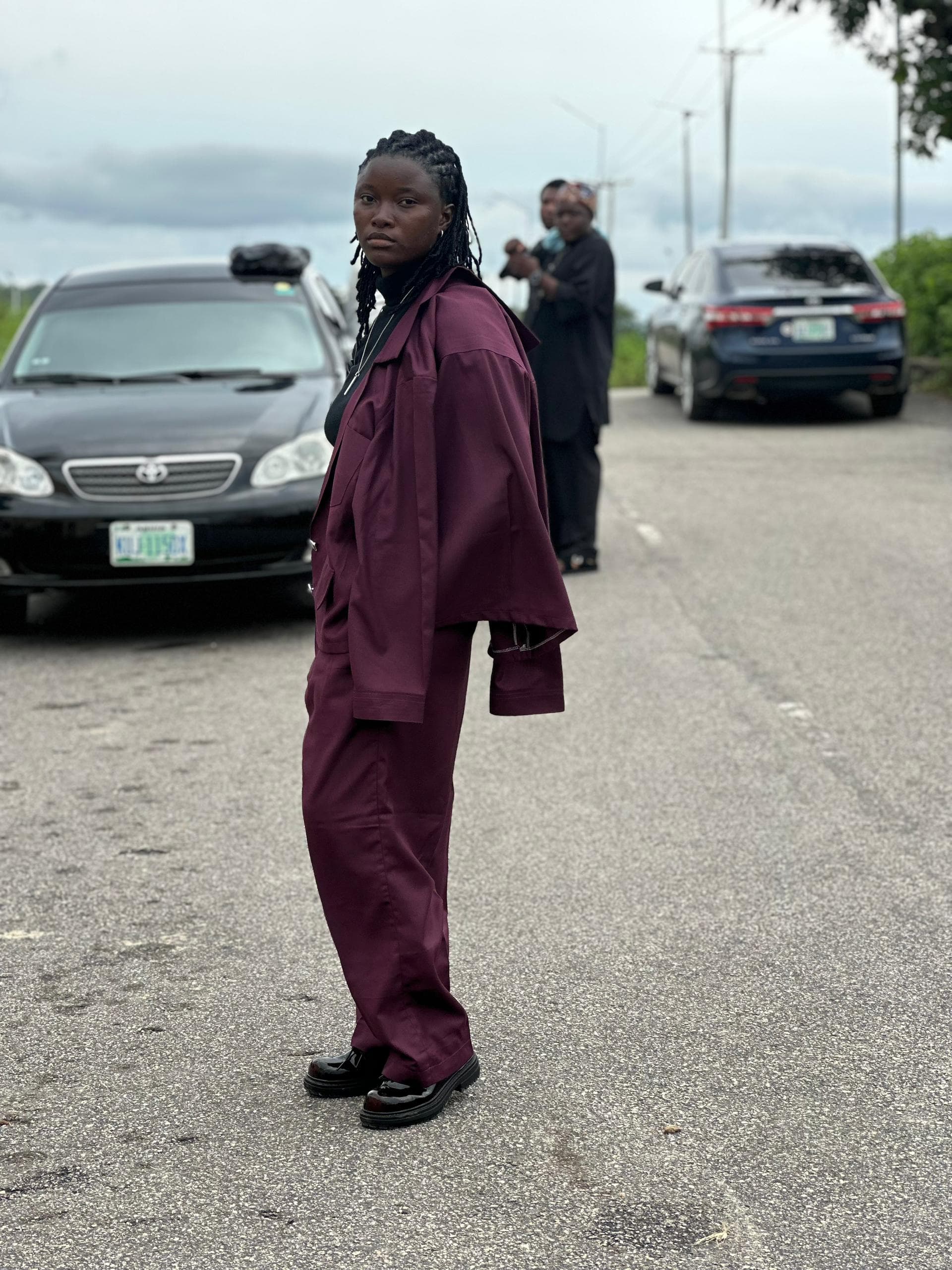
Dedicated to every Theatre Arts student who has discovered that the real performance begins long before the curtain rises.
Five minutes before a performance, the stage is never as quiet as the audience imagines. Someone is still looking for a prop that should have been on stage ten minutes ago. An actor stands in a corner, whispering lines they've rehearsed for weeks. Costumes receive one final adjustment. The lighting crew runs through cues one last time. The sound operator checks levels again, just to be sure.
Then someone turns to me and asks the question every stage manager eventually hears "are we ready?" Most times, I answer, "Yes. "Not because everything is exactly where it should be, but because I've learned that theatre is rarely about perfection. It is about preparation, trust and the ability to move forward together, even when everything isn't perfect.
As I write this, I am in my final year in the Department of Theatre Arts, preparing to stage-manage my last undergraduate production. My prompt book has become almost an extension of me. Every rehearsal brings another note to write down, another cue to adjust, another problem to solve and another reminder that theatre is, above all else, a living art. It changes every day, and so do the people creating it.
In a few weeks, an audience will sit comfortably in the auditorium and watch a performance that will last for about an hour, perhaps an hour and twenty minutes. They will applaud, laugh, reflect and eventually go home. What they will never fully see are the months that came before those eighty minutes.
They will never know how many rehearsals stretched late into the evening after lectures had ended. They will never see the countless times a scene had to be stopped and started again because it still wasn't truthful enough. They won't witness the production meetings where ideas were debated, challenged and reshaped. They won't know how many costume fittings, lighting adjustments, script revisions and technical rehearsals it took before we were finally ready to invite them into our world and honestly, they shouldn't have to. If they leave believing that everything unfolded effortlessly, then perhaps we have done our jobs well.
When I first gained admission into the department four years ago, I thought theatre was mostly about performance. Like many young students, I admired the actors who commanded the stage, the applause that followed a successful performance and the magic that seemed to exist under the lights. I didn't yet understand that some of theater's greatest lessons happen where the audience never looks, they happen backstage, they happen in rehearsal halls. They happen in the quiet conversations after everyone else has gone home. That was where my real education began.
Throughout my time in the department, I have had the privilege of serving mostly as a stage manager and, on some occasions, as a student director. Those experiences have allowed me to see theatre from different perspectives. One taught me how to coordinate people and processes; the other challenged me to shape ideas into performances. Together, they taught me something much more important that theatre has never really been about individual brilliance. It has always been about collective effort.
People often describe stage management as organization, they're right but that definition barely scratches the surface. Stage management is about carrying responsibility quietly. It is about anticipating problems before they happen, staying attentive when everyone else is focused on something different and making sure every moving part somehow moves together. It is also about people and people are beautifully complicated.
Over the years, I have worked with students from different backgrounds, different personalities and different creative philosophies. Some thrive under clear structure. Others need reassurance before they discover their confidence. Some question every decision before committing to it, while others simply get to work without seeking recognition.
Learning to work with those differences has probably been one of the most difficult parts of my journey. It has also been one of the most rewarding. I won't pretend I have always handled it perfectly. There have been rehearsals where the pressure became overwhelming. Days when deadlines seemed too close, cues were constantly being missed and scenes that worked beautifully the day before suddenly refused to come together.
On days like that, frustration has sometimes found its way into my voice. I've had moments when I became worked up. Moments when exhaustion spoke louder than patience. Moments I later replayed in my head while walking back to my lodge, wondering whether I could have communicated better or led differently. Those moments humbled me.
They reminded me that leadership isn't about never losing your composure. Leadership is recognizing when you have, taking responsibility, learning from it and returning the next rehearsal determined to be better than you were the day before. The next rehearsal always comes and so does another opportunity to grow.
Perhaps that is one of the greatest gifts Theatre Arts has given me. It has taught me that growth is rarely dramatic. Sometimes growth looks like choosing your words more carefully. Sometimes it looks like listening before speaking. Sometimes it is simply learning that every member of a production deserves to feel seen, respected and valued, regardless of the role they play. Because no production succeeds because of one person not the director, not the lead actor, not the stage manager, not anyone. Every successful production is built on countless acts of commitment that rarely receive applause. Theatre has also taught me something about balancing life.
Like every student in the department, I have had to find a way to balance lectures, fieldwork, theoretical courses, practical classes, rehearsals, assignments, tests and production responsibilities. There were days when I left one classroom already thinking about another rehearsal. There were evenings when I carried scripts and lecture notes in the same bag because both demanded equal attention. It wasn't always easy, there were moments when twenty-four hours simply didn't feel like enough. Yet somehow, those competing demands never weakened one another Instead, they strengthened each other.
The theories discussed in class became clearer once they came alive in rehearsal. Rehearsals, in turn, gave deeper meaning to what we studied in books. I gradually stopped seeing theory and practice as separate parts of my education. They became two ways of understanding the same craft.
Looking back, I realise that the department wasn't only training me to work in theatre. It was teaching me discipline, time management resilience, patience and perrhaps most importantly, consistency. Not every production has been successful. Some have ended exactly as we imagined, others haven't. Those disappointments have stayed with me longer than the standing ovations. Not because they defined me, but because they challenged me.
After every production that fell short of expectations, I found myself asking difficult questions:
What could I have done differently?
What did we overlook?
What do I need to improve before the next production?
Those questions were uncomfortable, they were also necessary success deserves celebration but it should never become a place where we decide to live.
One belief has quietly followed me throughout my years in this department. If my last production remains better than my next because I became comfortable, then somewhere along the line I stopped growing. Every production should challenge me differently. Every rehearsal should leave me knowing something I didn't know before. Every mistake should become part of the next success.
That has become my personal standard not because I expect perfection, but because I believe growth is one of the greatest responsibilities any artist owes to their craft. The beautiful thing about Theatre Arts is that it never allows you to remain the same person for very long. It teaches you to trust people, it teaches you to depend on people, it teaches you to forgive people,and perhaps most importantly, it teaches you to forgive yourself when things don't go exactly as planned.
Some of my favourite memories were never part of any performance. They were the conversations after rehearsals. The laughter that interrupted serious moments. The shared meals when everyone was too tired to cook but too happy to complain. The spontaneous applause in rehearsal when a difficult scene finally came together. The cast photographs taken after every production because no one wanted the moment to end. Those are the memories I know I'll carry long after graduation.
As I stand in the wings preparing to call cues for what will be my final undergraduate production, I realise that I am still learning, I hope I always will. Because theatre has a remarkable way of reminding you that no matter how much you know, there is always another lesson waiting in the next rehearsal, another challenge hiding in the next production and another opportunity to become a better artist and a better person.
Soon, the lights will fade, the curtain will fall, the set will be struck, the costumes will be packed away and another group of students will step into these rehearsal spaces, carrying the same hopes, the same anxieties and the same determination to create something meaningful. They, too, will discover that the real work of theatre happens long before opening night.
When the audience watches our final production, they will experience a little over an hour of performance. I will remember four years, I'll remember the classmates who became family. The lecturers who refused to let us settle for less than our best, the rehearsals that tested my patience. The productions that stretched my abilities, the mistakes that taught me humility, the successes that reminded me to remain hungry, the countless ordinary days that quietly shaped an extraordinary journey.
Four years ago, I came into this department hoping to learn how theatre works. Today, as I prepare to call cues one final time as an undergraduate, I realise the department has given me something much greater. It taught me that leadership is service. That excellence is a habit, that every role matters, that the strongest productions are built on trust and that the people working quietly in the wings are just as important as those standing confidently in the spotlight.
When this final production ends, I will leave with a degree but that will never be the greatest thing I take away from Theatre Arts. I'll leave with friendships forged through shared purpose, lessons earned through trial and error, and a love for the craft that has only grown stronger with every rehearsal, every challenge, every disappointment and every triumph. The audience will remember an hour of theatre, I will remember four years of becoming and somehow, I think that has always been the real performance.

At the end of every journey, one of the greatest achievements is the experience and relationships we forged along the way.
Brilliant thought's
The journey almost always comes with lessons you never thought were learnable.