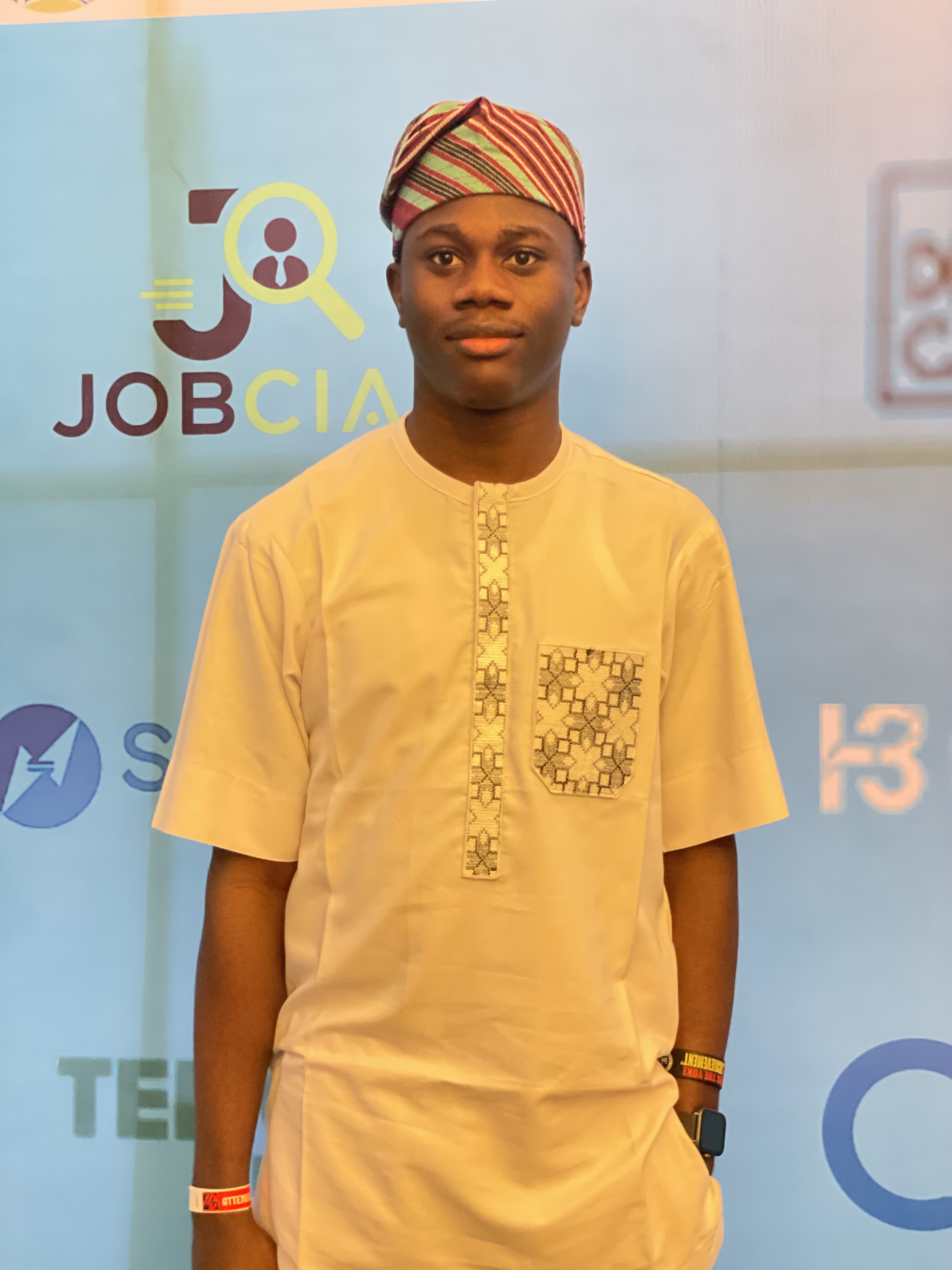
My name is Oluwaferanmi Isaac Adebayo. I am a 300-level law student at Joseph Ayo Babalola University and the Founder and CEO of Indegenius.
I am a student passionate about research and about the global output of intellectuals, particularly in Africa. As I began my research journey, I found a problem in the African intellectual space.
Ideas exist everywhere, and people are almost always ready to express them, but there is often no platform to publish that idea. I also found that Africa has a problem of access, even in the age of the internet.
Researchers and knowledge creators lack access to quality materials, data, analytics, and finance, and students lack access to the research output that knowledge creators produce.
I asked myself why this problem exists, and I arrived at two hypotheses that became our founding philosophy. The first is that every idea is either commercialized or hidden behind a paywall. The second is that Africans, due to economic downturn and lower purchasing power, cannot afford that access, even though data and materials are as important to research as blood is to life.
I also found that research in Africa remains antiquated, with little sign of improvement through technology. The scale of the gap is stark. According to UNESCO, the global average is roughly 1,420 researchers per million people, and Europe's average sits close to 3,935, while low-income countries, the majority of them in Africa, average just 176 researchers per million people.
Professors and researchers in many African communities still rely on data that is outdated or repealed. Worse still, students are shut out of the research community almost entirely, engaged only when they approach their final year defense. This produces substandard work with little genuine academic inquiry, and even where strong work is produced, it ends up collecting dust on university shelves with no further implementation or interrogation of its findings. During COVID-19, European governments turned to their universities for solutions. Why can't Africa do the same?
In March 2026, after probing these questions, I partnered with Olanibi Gratitude, a fellow visionary who had already solved local community problems with apps like JABU Study, which helped over 2,000 students improve their exam performance. Together we set out to build a platform where African ideas would be housed by African innovation, where intentional intellectual collaboration could happen between students, professors, and anyone working on a project, and where individuals across intellectual communities could preserve, refine, and develop their ideas.
Our approach is straightforward. After studying LinkedIn, Substack, Medium, ResearchGate, and Elsevier, we recognized that Africa's access problem is not only financial but infrastructural. So we built a low-bandwidth system accessible anywhere in the world, even on a simple 2G device.
We then focused on building campus communities through chapter leads at major campuses, to drive ideas both on and off the platform.
We also work to de-commercialize and de-fragment ideas. Students, researchers, and professors who are writing or willing to write articles and microblogs can build communities around free content, while highly technical work is featured and subsidized, whether by government, universities, or research institutes, and can be routed to university journals for subscription, so authors are financially recognized for their work. We prioritize discoverability by giving every researcher an in-depth profile with metadata accessible directly through Google, and giving every article or piece of research metadata that makes it discoverable across the internet and indexed on Google Scholar. And by building real channels of communication, we enable collaboration and networking, so a professor with years of experience finally has readers, and students who need mentorship have knowledgeable people to follow.
We currently operate across 25+ universities, with 278 users and 210 published pieces, and we are growing.
It is an intellectual collaboration and discovery infrastructure. We want an article to become the beginning of an intellectual journey rather than the end of one. A student should be able to publish an idea, have that idea discovered by another student or researcher, receive questions and counterpoints, discover people working on related problems, and gradually develop that idea into something more substantial. Likewise, a professor or researcher should be able to make their work discoverable, build an audience around it, and find people who can challenge, support or develop the work further.Our long-term goal is therefore to reduce the fragmentation between African students, researchers, professors, institutions and ideas, so that knowledge can move more easily between people, universities and eventually into society.
We continue to build.
Thank you for building this!
Even on a 2G device?! I did not know that!