I have always found it fascinating that humanity keeps developing new ways to understand things that happened long before we were born.
We built telescopes to see further into space. We developed instruments to look deeper into the human body. We created machines that can reconstruct places that no longer exist.
And sometimes, technology gives us another opportunity to hear from people who have been silent for thousands of years.
In 79 AD, Mount Vesuvius erupted.
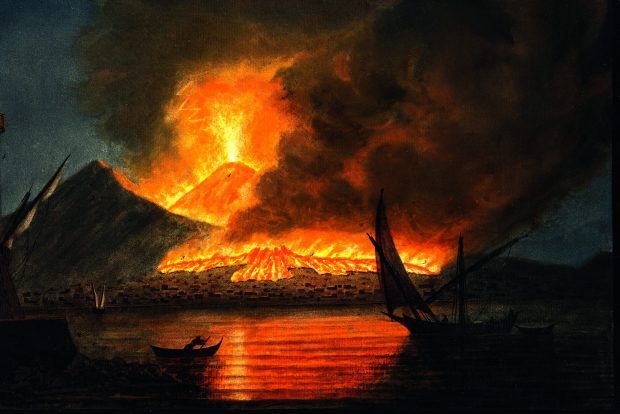
The eruption buried the ancient cities of Pompeii and Herculaneum, destroying homes, buildings and lives in a matter of hours. But somewhere inside a villa in Herculaneum was a library.
Hundreds of papyrus scrolls were caught in the eruption.
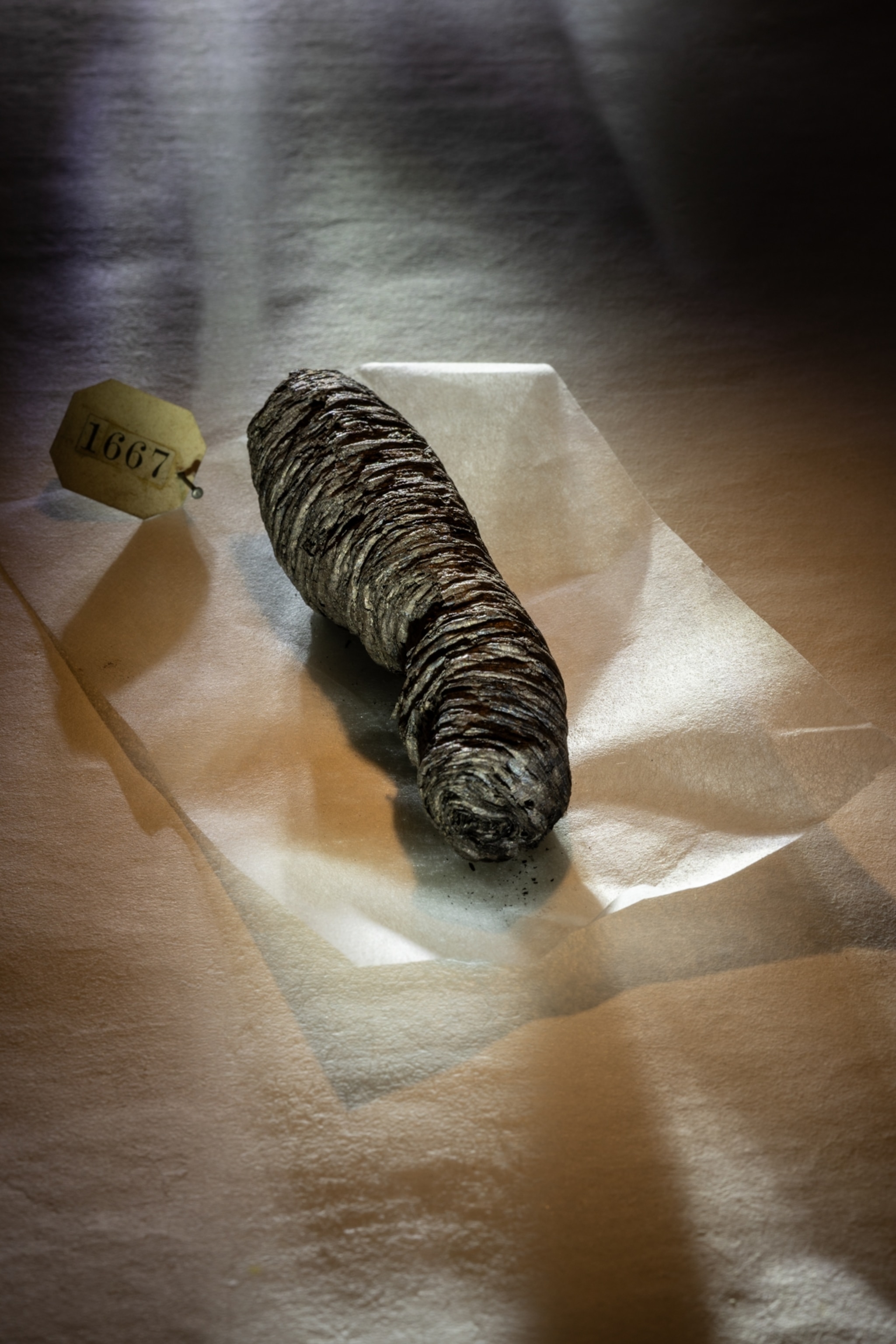
The heat carbonized them, turning them into blackened, fragile objects. It is quite paradoxical that the same volcanic disaster that destroyed the library also preserved it.
For almost two thousand years, the books remained unread, but they were still there. The knowledge had not completely disappeared.
We simply could not reach it.
Scientists had tried to open the scrolls, but the problem was that they had become so fragile that physically unrolling them could destroy them. Imagine having a book containing information from two thousand years ago and knowing that the moment you try to open it, you may lose the very information you are trying to save.
So the question changed.
It was no longer, “How do we open the scroll?” It became, “How do we read something that cannot be opened?”
Technology provided an answer.
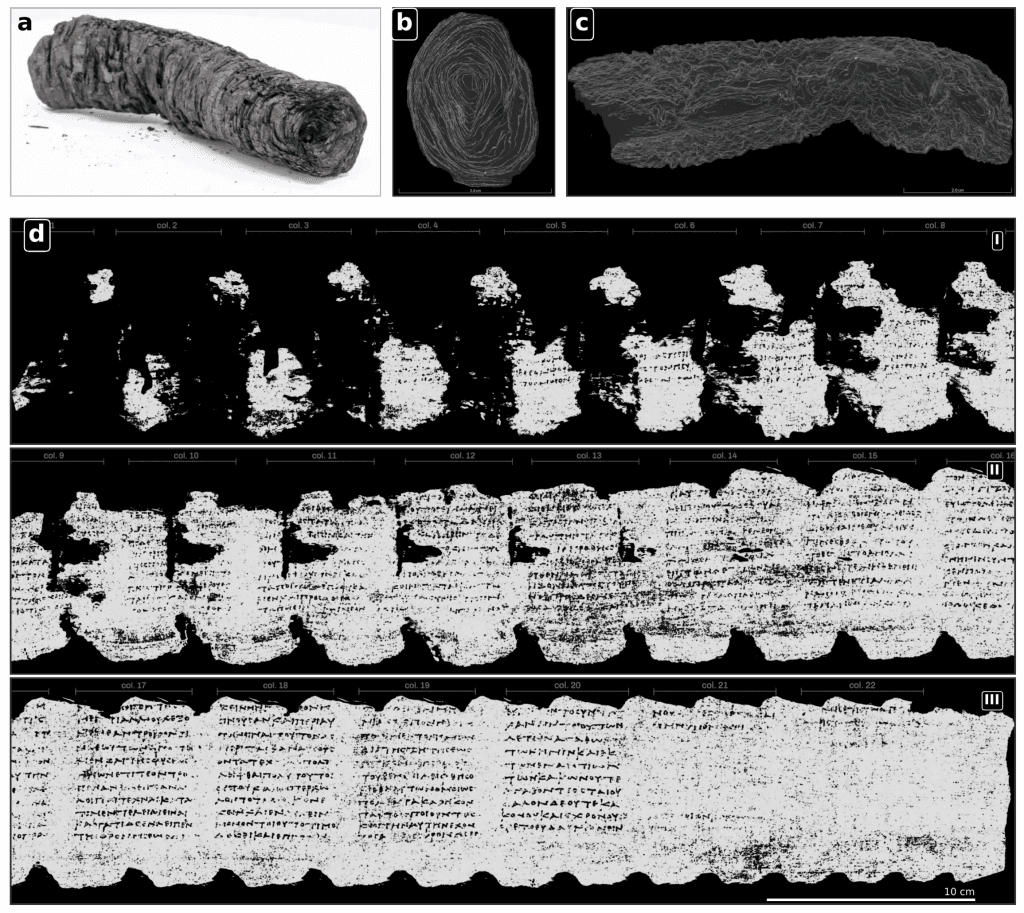
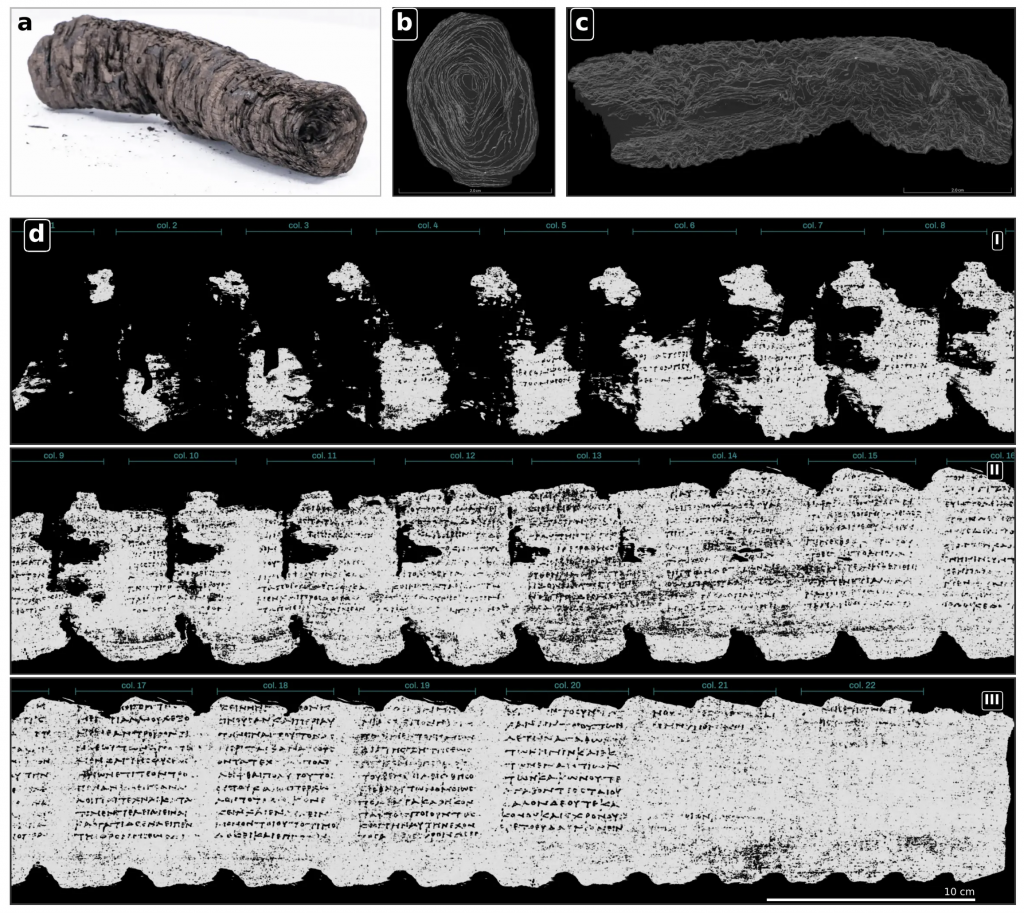
Researchers used high-resolution X-ray scans from a particle accelerator to see the internal structure of the rolled scrolls. They placed the carbonized scrolls inside a synchrotron, and fired an extremely precise, high-energy X-ray beam through them. This created thousands of ultra-thin 3D digital slices at a resolution of just two microns.
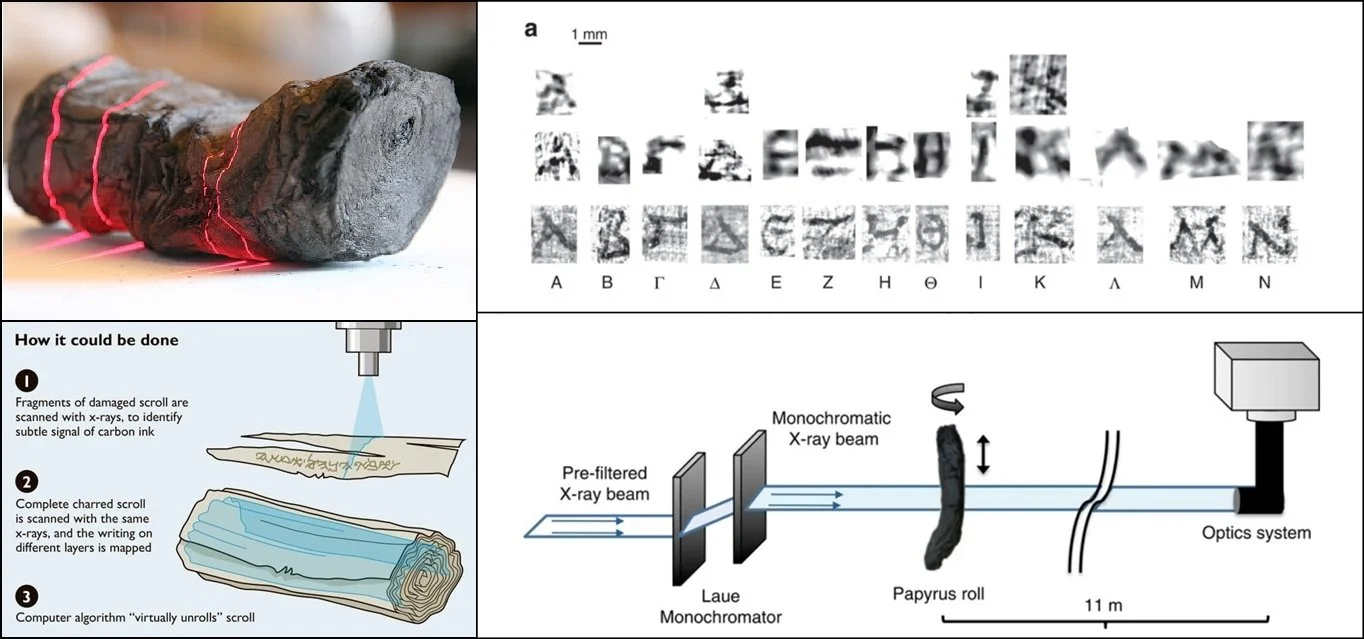
For comparison, a single strand of human hair is about 70 microns thick. The scans revealed the delicate spiral layers of the still-rolled papyrus. Computers could then reconstruct and digitally flatten those layers, effectively unrolling the scroll without physically touching it.
But even that was not enough.
The ancient carbon-based ink was extremely difficult to distinguish from the carbonized papyrus. Computer algorithm analyzed those spiral patterns and digitally flattened each layer, virtually unrolling the scroll without ever touching it.
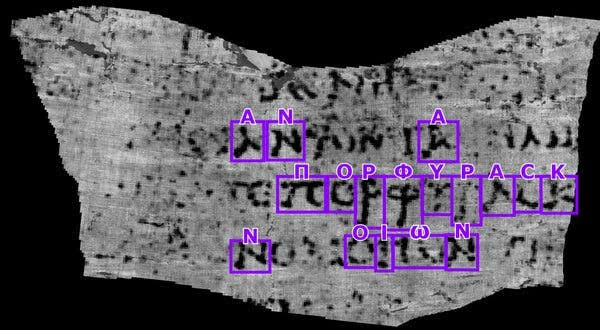
Artificial intelligence and machine-learning techniques helped identify these patterns.
And suddenly, letters began to emerge. Then words. Then sentences. Something that had been inaccessible for nearly two thousand years began to speak again.
Some of the recovered texts are philosophical works associated with Philodemus, an Epicurean philosopher whose writings make up a significant part of the Herculaneum library. The recovered material includes philosophical discussions about human nature, pleasure and the good life. More recently, researchers have even managed to virtually unwrap and read an entire Herculaneum scroll without physically opening it. See scrollprize.org.
There is something deeply beautiful about that. Two thousand years ago, someone was thinking about what makes life meaningful.
Today, we are still thinking about it.
The language has changed. The civilization has changed. The technology has changed.
But the human being asking the questions has not changed as much as we might imagine. And perhaps that is what fascinates me most about this discovery.
Technology did not replace history. It did not correct history. It did not make the ancient world irrelevant. It simply gave us another lens through which we could see and access it.
The volcano did not care about the knowledge inside those scrolls. It did not choose what should survive. It destroyed an entire city and, unintentionally, buried a library that would remain inaccessible for centuries.
Human beings later found the scrolls. Human beings failed to open them. Then human beings developed better scientific instruments.
We developed computational methods. We developed artificial intelligence capable of recognizing traces that the human eye could not see. And through all of that, something remarkable happened.
The future became an instrument through which we could look more clearly into the past. That makes me think differently about technological progress.
Sometimes, when we talk about technology, we speak as though its purpose is simply to move humanity forward. We imagine the future as something that must replace what came before it.
But perhaps progress is not always about leaving the past behind. Perhaps some of our greatest technological achievements are valuable precisely because they allow us to return to questions we thought we had lost.
What did people believe? What did they know? What did they fear? What did they love? What did they consider a meaningful life? What ideas disappeared because the people who carried them disappeared? And how much of human knowledge have we lost simply because we did not yet possess the tools required to preserve or recover it?
This is why I find the Herculaneum scrolls so fascinating.
We did not discover a new civilization. We discovered a new way of seeing an old one, and there is a difference.
The technology did not manufacture the words inside those scrolls. It did not invent the philosophy. It did not create the questions about pleasure, abundance, human nature or the good life. Those things were already there. The technology simply allowed us to see them.
Innovation does not always have to mean creating something that has never existed before, and sometimes innovation means developing the capacity to perceive what has been in front of us all along.
There are probably thousands of questions sitting inside history that we have not yet learned how to ask. There are probably thousands of ideas that have not disappeared. They are simply inaccessible to us.
And perhaps somewhere between archaeology, physics, artificial intelligence and human curiosity, we are slowly developing the ability to bring some of them back.
The people who wrote those scrolls could never have imagined us. They could not have imagined computers. They could not have imagined particle accelerators. They could not have imagined artificial intelligence.
They certainly could not have imagined that almost two thousand years after their world disappeared beneath a volcano, people would build machines to recover their thoughts, and maybe that is one of the most beautiful things technology can give humanity.
A clearer way back to it.
Technology is our strength to speak again.
Source & attribution
The original short-form narration that inspired this article is by Cleo Abram, titled “The Real Story of these Ancient Scrolls.” This article is an independently written reflection and synthesis based on the subject matter. The article does not reproduce the original narration.
Original source: Cleo Abram, “The Real Story of these Ancient Scrolls” on YouTube Shorts
Additional factual information was checked against the Vesuvius Challenge’s published research and project materials, including its 2026 report on the first complete virtual unwrapping and reading of a Herculaneum scroll. (scrollprize.org)
AI disclosure: AI was used in the preparation of this article to assist with research verification, organization, editing and language refinement. The reflections, framing and perspective expressed in the article are the author’s own.

No comments yet. Sign in to join the discussion.