Africa has always had its own identity. Long before colonisation, long before globalisation, and long before Western influence became deeply embedded in our societies, we had our own languages, philosophies, systems of governance, art, fashion, traditions, and ways of life. Africa was never a continent without culture. It was a continent with thousands of cultures, each with its own history and identity.
Yet today, many Africans unconsciously view themselves through a Western lens.
We often measure success, beauty, intelligence, and even professionalism by how closely we align with Western standards. Many of us have been taught, directly or indirectly, that certain aspects of our natural identity need to be changed before they can be accepted.
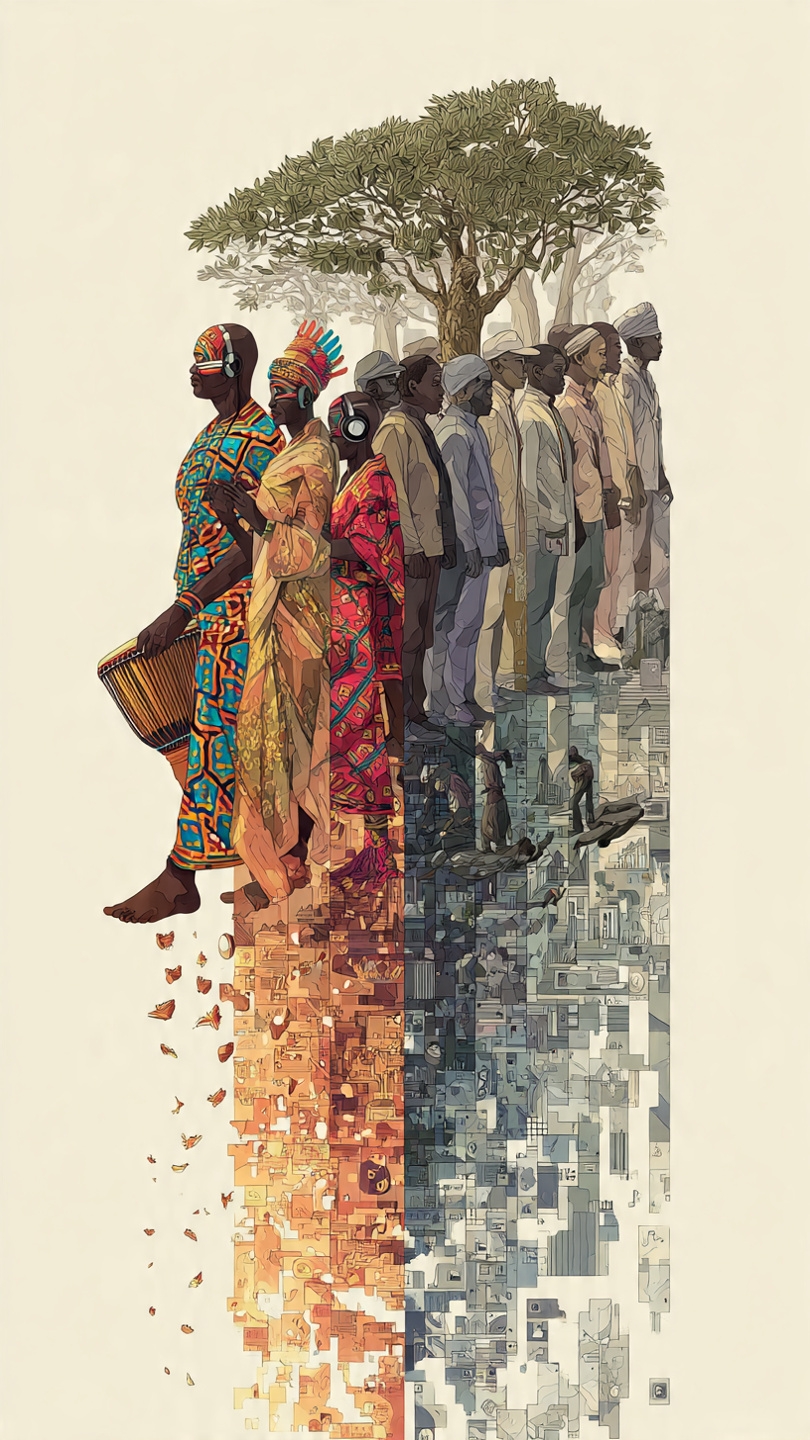
Something as simple as our hair is an example. Natural African hairstyles have existed for centuries, carrying cultural meaning and history, yet many people still feel pressured to keep their hair in styles that are considered more "acceptable" by Western-influenced standards. In many places, young Africans are expected to cut their hair low to appear more presentable, disciplined, or professional, as if our natural appearance needs to be adjusted before it can be respected.
The same applies to dressing. Traditional African clothing, fabrics, and styles that represent our heritage are sometimes viewed as outdated, while Western fashion is automatically associated with being modern, successful, or sophisticated. Many of us chase trends from abroad while overlooking the creativity and beauty already present within our own cultures.
Even the way we speak, the accents we adopt, and the things we admire can reveal how deeply these influences have shaped our thinking. Speaking with a foreign accent is sometimes perceived as a sign of higher intelligence or status, while local expressions and languages are often undervalued.
This is not an argument against learning from the Western world. Every civilisation grows by exchanging ideas. Africa should continue to embrace innovation, science, technology, and global connections. The problem begins when influence becomes the replacement of identity, and when we start believing that progress requires us to distance ourselves from our roots.
Africa does not need to reject the world. It needs the confidence to participate in it without losing itself. We should be able to adopt what is beneficial from other cultures while still respecting our own history, traditions, and values.
The goal should not be to become a copy of another society. The goal should be to build an Africa that can stand among the world's greatest while remaining proudly African.
A tree does not become stronger by abandoning its roots. It grows stronger because of them.
No comments yet. Sign in to join the discussion.